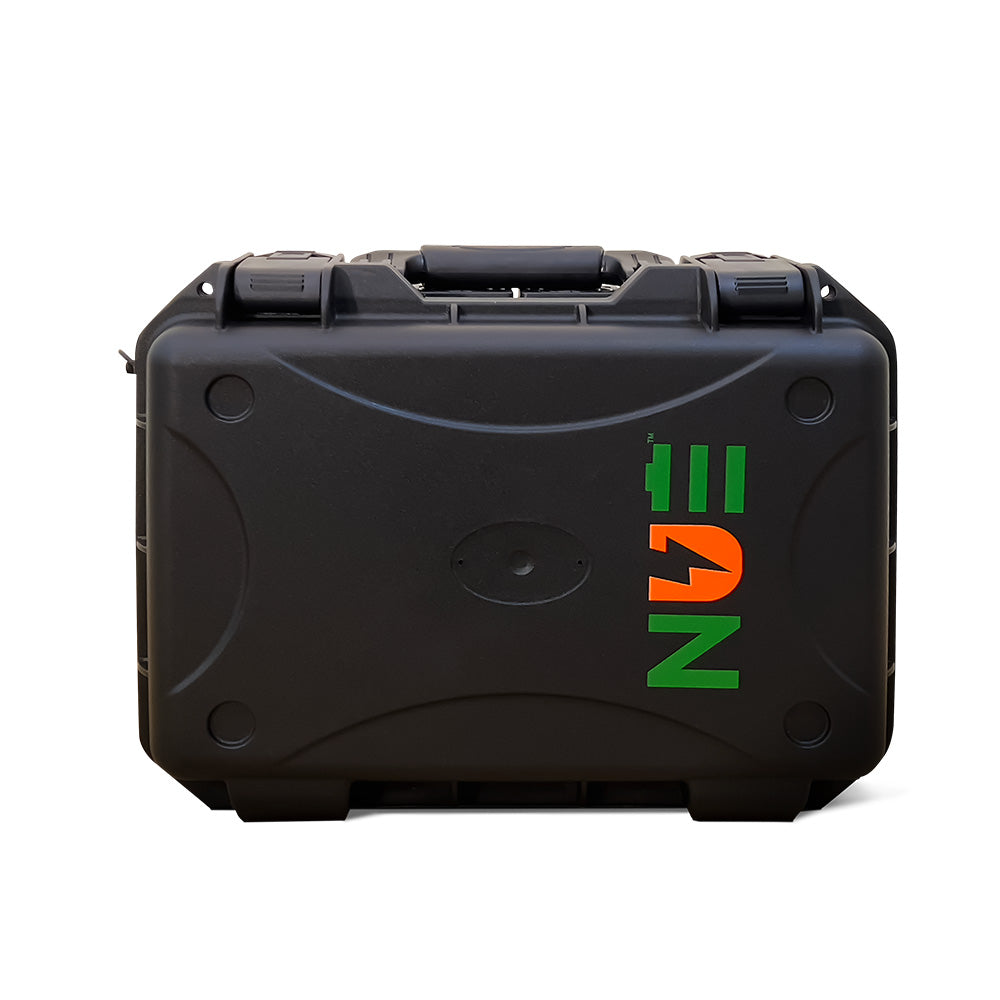
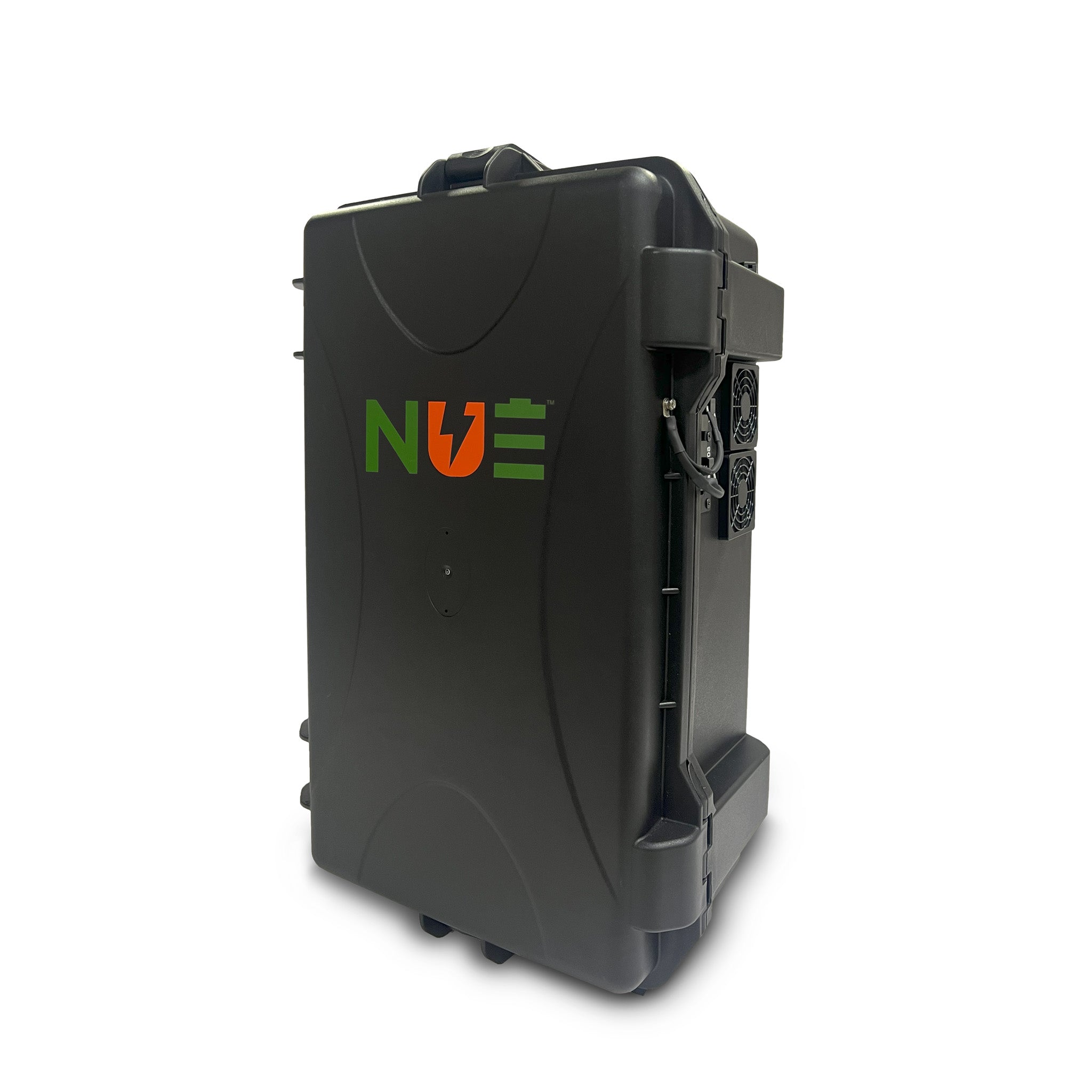
Portable power stations are sold in every big-box store today. Most are built for a weekend at the campsite: thin plastic shells, consumer-grade cells and electronics that quietly drain the battery while it sits in a closet.
That isn't good enough when lives depend on the power coming on. New Use Energy was founded by people who have served, and we built the SunCase for the places where the grid is gone and failure isn't an option: forward positions, flooded neighborhoods, remote film sets and disaster zones.
For more than four years, SunCase units have worked on the front lines alongside military units and humanitarian teams in Ukraine, running drones, radios and anti-drone systems without the noise, exhaust or heat signature of a generator. They have logged more than 10 million combat hours, with roughly 250,000 more added every week.
The same units go where storms have been. NGO disaster-response teams use SunCase to run flood-control pumps, medical devices and communications after hurricanes, including Hurricane Melissa relief in Jamaica. At Amazon's FTX2026 disaster-response exercise, SunCase powered multi-agency teams including FEMA and the American Red Cross.
That field record is why the Defense Innovation Unit awarded New Use Energy a contract to develop battle-ready portable power nodes. And it's why every SunCase is built the same way, whether it ships to a base, a fire district or a film crew: built once, built to last.