Portable DC Power

Sort by
Sort by Best selling
4 products
vendor New Use Energy In stock
NUE 24V Battery Generator
$3,100.00
vendor New Use Energy In stock
NUE 48V Battery Generator
From $2,800.00
vendor New Use Energy In stock
NUE 36V Battery Generator
From $2,800.00
vendor New Use Energy In stock
48V CINE Battery Generator
From $3,300.00

Portable DC Power  /  Battery Generators

Stop converting power.
Start using it.

Most of what you run on location — LED fixtures, broadband amplifiers, radios, drone ground stations — already runs on DC. Every time you push that load through an inverter, you burn 10–15% of your battery turning DC into AC and back again. New Use Energy Battery Generators skip the round trip entirely, feeding native 24V, 36V or 48V DC straight to the device. Same battery. More runtime. No generator noise, no fumes, no fuel run.

  • 6,000Cycles at 80% DoD
  • 10–15%Efficiency reclaimed vs. AC conversion
  • 20 kWhFour units daisy-chained in parallel
  • −4°FRated discharge floor, to 140°F
  • 5 yrLimited manufacturer's warranty

Why does DC-to-DC power give you more runtime?

01

No inverter tax

A conventional power station stores DC, inverts it to 120V AC, then your fixture's power supply rectifies it back to DC. Two conversions, two losses, plus idle draw from the inverter itself. NUE Battery Generators deliver the voltage your gear already wants — so 10–15% of the pack that used to vanish as heat shows up as working hours instead.

02

LiFePO4, not lead

Lithium iron phosphate delivers up to 80% more usable energy than an equivalently sized lead-acid bank and holds 6,000 cycles at 80% depth of discharge. Run it flat, charge it, repeat — for years, not seasons. Built-in BMS protection, with Bluetooth monitoring through the BAT-BMS app on iOS and Android.

03

Scales by the case

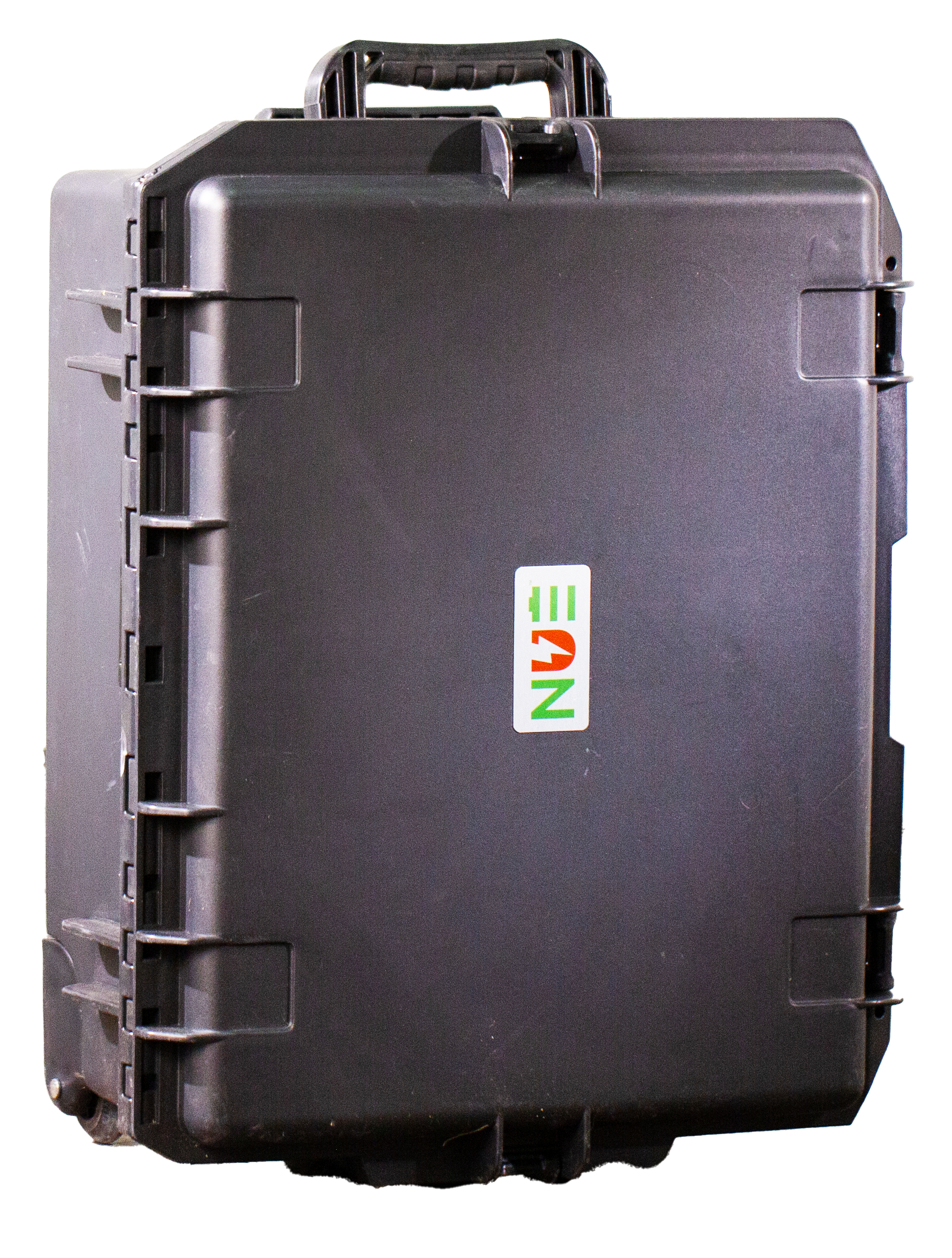
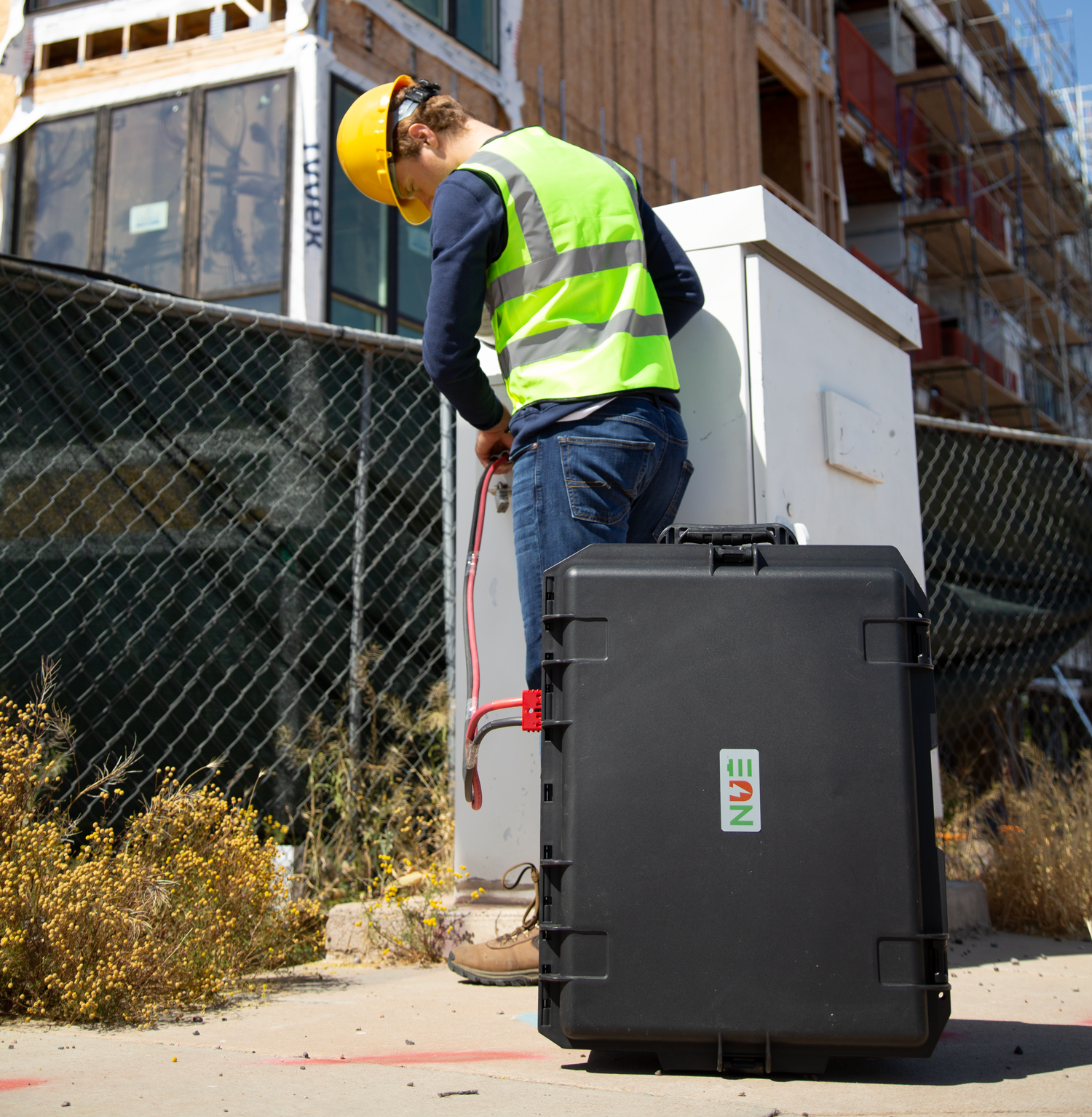
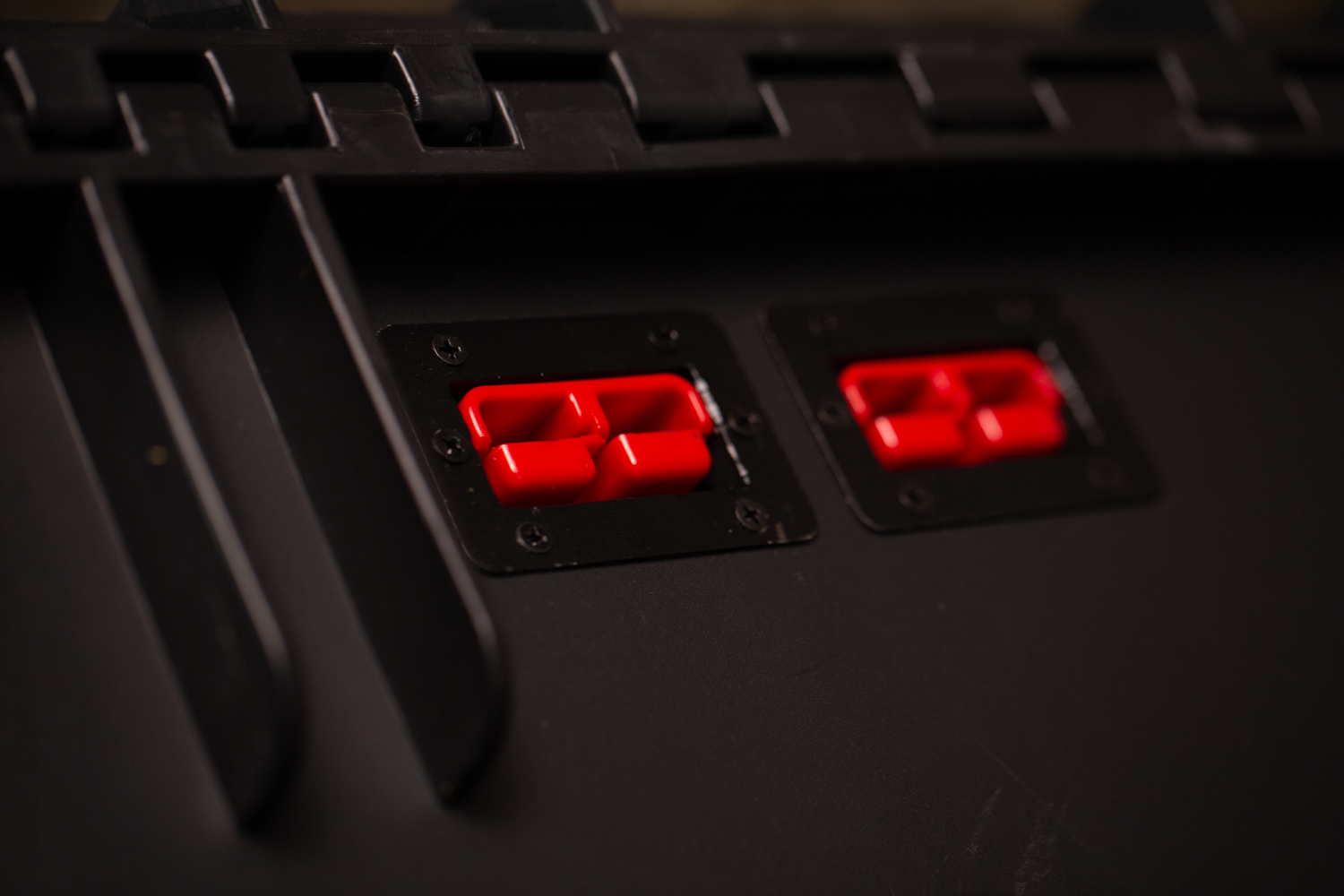
Every unit ships with two Anderson SB175 connectors. Chain up to four in parallel for a 20 kWh bank, or pull one case for a run-and-gun day. Weather-resistant Pelican-type housing, field-proven from disaster-response staging areas to forward operating positions.

Which NUE Battery Generator is right for your load?

Match the model to the native voltage of the equipment you're powering. If your gear runs on 48V, buy 48V — a converter in between puts the loss right back.

Comparison of New Use Energy portable DC battery generators
Model Nominal voltage Capacity Continuous current Built for From Link
NUE 24V Battery Generator 24V DC 200Ah  /  5.12 kWh 100A  (300A peak) 24V radio, tactical comms, vehicle and C5ISR loads $3,100 Specs →
NUE 36V Battery Generator 36V DC (38.4V nom.) 100Ah  /  3.84 kWh 150A  (350A peak) 36V broadband power supplies, controls, LED systems $2,800 Specs →
NUE 48V Battery Generator 48V DC (51.2V nom.) 100Ah  /  5.12 kWh 100A  (300A peak) 48V broadband nodes, location lighting, off-grid DC $2,800 Specs →
48V CINE Battery Generator 48V DC (51.2V nom.) 100Ah  /  5,120 Wh 100A  (300A peak) Nanlux Evoke, Dyno and TK fixtures — untethered, wheeled case $3,300 Specs →

Every model shares the same core platform: LiFePO4 cells, 6,000-cycle life at 80% DoD, 99 lb (45 kg) in a 23″ × 18″ × 11″ weather-resistant case, 2× Anderson SB175, UN 38.3 / UL1973 / CE certified cells, and a 5-year limited warranty. Battery heating and GPS tracking are available as configured options on the 36V, 48V and CINE models.

Where these run

Film & television production

Power Nanlux Evoke, Dyno and TK Series fixtures directly off 48V — no ballast tether, no generator on the sound take. The CINE model ships in a wheeled case with a 25 ft Nanlux-compliant cable, so the light goes where the shot is.

Broadband & telecom

Add clean, silent runtime to 24V, 36V or 48V broadband power supplies from any manufacturer. Roll a case to the node, connect Anderson, keep subscribers up through the outage window.

Military, government & first response

Feed 24V radio and communications gear without inverter drain. NUE systems have supported multi-agency disaster-response operations alongside FEMA, the American Red Cross and state and local teams — and deployed in the field overseas.

Off-grid & mobile solar

Pair with NUE solar to build a rechargeable microgrid that follows the work. Daisy-chain to 20 kWh when the job grows, then break it back down into single-case loads.

Questions buyers ask before they order

What is a DC battery generator?

A DC battery generator is a portable lithium iron phosphate (LiFePO4) battery system that supplies power at a native DC voltage — 24V, 36V or 48V — instead of inverting it to 120V AC. Because most modern LED lighting, broadband and communications equipment runs on DC internally, feeding it DC directly removes two conversion stages and recovers 10–15% of the energy a conventional AC power station would waste as heat.

How much longer will my lights run on a DC generator?

Expect roughly 10–15% more working time from the same stored energy, because you are not paying the AC inversion and rectification penalty or the inverter's idle draw. On a 5.12 kWh pack that is the equivalent of getting a free half-kilowatt-hour back on every charge.

Can I connect multiple units together?

Yes. Each unit carries two Anderson SB175 connectors and can be daisy-chained with up to three more — four units in parallel for a combined bank of roughly 20 kWh at matched voltage. Only chain units of the same nominal voltage.

How long do the batteries last?

6,000 cycles at 80% depth of discharge. Used hard on a daily production or utility schedule, that is well over a decade of service life. Cells are UN 38.3, UL1973 and CE certified, and every unit carries a 5-year limited manufacturer's warranty.

Will it work in cold weather?

Discharge is rated from −4°F to 140°F (−20°C to 60°C). Charging is rated from 32°F to 131°F (0°C to 55°C), so if you charge below freezing, order the battery heating option — available on the 36V, 48V and CINE models.

Can I monitor state of charge remotely?

Every unit includes Bluetooth monitoring through the BAT-BMS app for iOS and Android — state of charge, voltage, current and cell health from your phone. GPS tracking is available as a configured option if the cases travel between crews, sites or rental clients.

Is it safe to run indoors?

Yes. There is no combustion, no exhaust and no noise — the reasons a fuel generator has to live outside simply do not apply. That makes these units usable on a quiet set, inside a command post, or in an occupied building during an outage.

Which voltage should I buy?

Match the native voltage of your equipment. 24V for tactical radio and vehicle-based communications. 36V or 48V for broadband power supplies and DC lighting and control systems. 48V CINE if you are powering Nanlux Evoke, Dyno or TK Series fixtures and want a wheeled case with the Nanlux-compliant cable included.

Built by veterans. Proven in the field.

Every case is engineered to be dropped, hauled, rained on and put back to work the next morning. Pick your voltage, configure heating and GPS, and get power that goes where the generator can't.